Relay Setting & Coordination

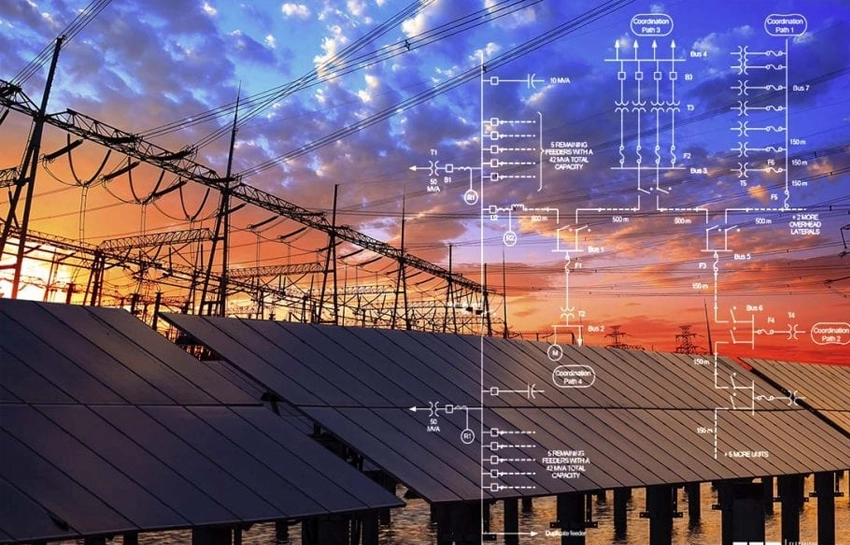
Prevention of human injury is the most important objective when designing electrical systems. Interrupting devices should have adequate interrupting capability. Energized parts should be sufficiently enclosed or isolated to avoid exposing personnel to explosion, fire, arcing, or shock. Safety should always take priority over service continuity, equipment damage, or economics.
The objectives of electrical system protection and coordination are to:
- Limit the extent and duration of service interruption whenever equipment failure, human error, or adverse natural events occur on any portion of the system.
- Minimize damage to the system components involved in the failure
The principal electrical system abnormalities to protect against are short circuits and overloads. Short circuits may be caused in many ways, including failure of insulation due to excessive heat or moisture, mechanical damage to electrical distribution equipment, and failure of utilization equipment as a result of overloading or other abuse.
Circuits may become overloaded simply by connecting larger or additional utilization equipment to the circuit. Overloads may also be caused by improper installation and maintenance, such as misaligned shafts and worn bearings. Improper operating procedures (e.g., too frequent starting, extended acceleration periods, obstructed ventilation) are also a cause of equipment overload or damage.
Coordination is the selection and/or setting of protective devices in order to isolate only the portion of the system where the abnormality occurs. Coordination is a basic ingredient of a well-designed electrical distribution protection system and is mandatory in certain health care and continuous process industrial systems.
System protection is one of the most basic and essential features of an electrical system and should be considered concurrently with all other essential features. Too often system protection is considered after all other design features have been determined and the basic system design has been established. Such an approach may result in an unsatisfactory system that cannot be adequately protected, except by a disproportionately high expenditure.
Reference Standard: IEEE Std 242, IEEE Std 141, IEEE Std 142, IEEE Std 241, IEEE Std 399, IEEE Std 493, NFPA 70, NFPA 70E, IEEE Std 80
Download Checklist Here Download Checklist Here