
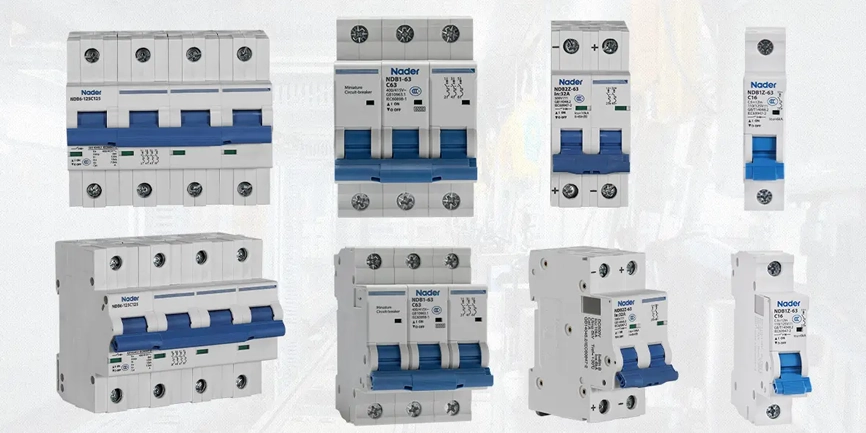
Description
A technical, clause-based guide to protection devices including MCB, RCCB, RCBO, and ELCB as per IEC 60898-1, IEC 61008, IEC 61009, and IEC 62423. Includes tripping curves, sensitivity classes, breaking capacities, and application recommendations.
Keywords
MCB types IEC 60898, RCCB IEC 61008, RCBO IEC 61009, ELCB types, protection devices India, tripping curves MCB, Type A Type B RCCB, IS 12640, IEC 62423 Type F Type B RCD, short-circuit capacity MCB
Table of Contents
- Introduction
- Standards Governing Protection Devices
- MCB (Miniature Circuit Breaker) — Types & Standard Clauses
- RCCB (Residual Current Circuit Breaker) — Types & Sensitivities
- RCBO (Residual Current Breaker with Overcurrent Protection)
- ELCB (Earth Leakage Circuit Breaker) — Why It Is Obsolete
- Tripping Curves of MCBs (Type B, C, D)
- Types of RCCB/RCBO Based on Residual Current Characteristics
- Breaking Capacity Requirements
- Application Guidelines (IEC & IS Based)
- Indian Standard Requirements
- Common Misconceptions Corrected
- FAQs
1. Introduction
Protection devices such as MCBs, RCCBs, RCBOs and (historically) ELCBs form the backbone of electrical safety in industrial, commercial and residential installations. These devices are governed by IEC and IS standards that define:
- Overcurrent protection
- Earth leakage protection
- Short-circuit capacity
- Residual current characteristics
- Tripping curves
- Test requirements
This guide explains each device type using the correct clause references from IEC/IS standards.
2. Standards Governing Protection Devices
| Device | Standard | Key Clauses |
| MCB | IEC 60898-1 | Clause 3.2.13, Table 7, Clause 9.10 |
| RCCB | IEC 61008-1 | Clause 3.1.1, Table 1, Clause 4.3, Clause 9.9 |
| RCBO | IEC 61009-1 | Clause 3.1.1, Clause 4.1, Clause 9.21 |
| Advanced RCCB/RCBO Types | IEC 62423 | Type F & Type B definition clauses |
| Indian Adoption Standards | IS 12640, IS 14772 | RCCB/MCB distribution boards |
3. Miniature Circuit Breaker (MCB)
Governed by: IEC 60898-1:2015 / IS/IEC 60898-1
Definition — Clause 3.2.13
An MCB is defined as a mechanical switching device designed to protect a circuit against:
- Overload
- Short-circuit
Tripping Characteristics — Clause 9.10 & Table 7
Defines time-current characteristics and instantaneous trip ranges (B, C, D curves).
Typical Current Ratings:
- 6 A to 125 A (standard LV circuits)
Breaking Capacity:
6 kA / 10 kA (Clause 9.12)
4. RCCB (Residual Current Circuit Breaker)
Governed by: IEC 61008-1:2012 / IS 12640 (Part 1:2016 & 2024)
Definition — Clause 3.1.1
An RCCB is a device intended to open a circuit when residual current (earth leakage) exceeds a preset value.
Sensitivity Classes — Table 1 (IEC 61008-1)
- 10 mA
- 30 mA
- 100 mA
- 300 mA
- 500 mA
Application:
- 30 mA: Personnel protection
- 100/300 mA: Fire protection
Test Requirements — Clause 9.9
Covers residual current tripping tests, endurance tests, and EMC immunity.
5. RCBO (Residual Current Breaker with Overcurrent Protection)
Governed by: IEC 61009-1:2012
Combines:
- Overcurrent protection (MCB)
- Earth leakage protection (RCCB)
Definition — Clause 3.1.1
Integrated device providing protection against overload, short-circuit, and residual current.
Short-Circuit Tests — Clause 9.21
RCBO must safely interrupt short-circuit current under simultaneous overcurrent & residual current conditions.
6. ELCB (Earth Leakage Circuit Breaker)
Two Types Historically Used
- Voltage Operated ELCB (VO-ELCB)
- Operates on rise of earth potential
- Not reliable
- Not supported by modern IEC/IS standards
- Obsolete
- Current Operated ELCB
- This is today’s RCCB
- Governed by IEC 61008-1
Why VO-ELCB is Obsolete
- Fails when earth path impedance changes
- Cannot detect direct leakage to alternate paths
- Poor performance with modern electronics
7. Tripping Curves of MCBs (Type B, C, D)
As per IEC 60898-1: Table 7
| Type | Instantaneous Trip Range | Application |
| Type B | 3–5 × In | Residential, resistive loads |
| Type C | 5–10 × In | Motors, HVAC, mixed loads |
| Type D | 10–20 × In | Transformers, welders, high inrush equipment |
Engineering Note: Select curve based on motor inrush, harmonic levels, and nuisance trip analysis.
8. Types of RCCB/RCBO Based on Residual Current Characteristics
IEC defines four major types, depending on leakage waveform:
8.1 Type AC — IEC 61008-1 Clause 4.1
Detects pure sinusoidal AC leakage.
Not recommended for modern electronic loads.
8.2 Type A — IEC 61008-1 Clause 4.1
Detects:
✔ AC leakage
✔ Pulsating DC leakage
Used for:
- UPS systems
- VFDs
- SMPS-based loads
- Industrial electronics
8.3 Type F — IEC 62423
Detects:
AC leakage
Pulsating DC
Mixed frequencies up to 1 kHz
Used for:
- Single-phase inverters
- Washing machines
- Heat pumps
8.4 Type B — IEC 62423 Clause 4 & Table 1
Detects:
AC
Pulsating DC
Smooth DC
Used for:
- EV chargers
- PV solar inverters
- Industrial drives
- Medical equipment
9. Breaking Capacity Requirements
MCB Breaking Capacity — IEC 60898-1 Clause 9.12
- 6 kA
- 10 kA
- Higher values (IEC 60947-2 MCCBs for industrial)
RCBO Breaking Capacity — IEC 61009-1 Clause 9.18
Must withstand combined short-circuit and residual current fault conditions.
10. Application Guidelines (IEC & IS Based)
Residential / Commercial
- MCB: Type B
- RCCB: Type AC or A
- Sensitivity: 30 mA
- DBs as per IS 14772
Industrial Loads
- MCB: Type C or D
- RCCB/RCBO: Type A / F
- Sensitivity: 100–300 mA for feeders
- 30 mA mandatory for sockets (IEC 60364-4-41)
Solar PV & EV Chargers
- RCCB/RCBO: Type B (IEC 62423)
- Or Type A + RDC-DD (for EVSE)
Drives, VFDs, UPS
- RCCB/RCBO: Type A or Type F
11. Indian Standard Requirements
IS 12640 (Part 1:2024)
Equivalent to IEC 61008-1 for RCCBs.
Defines tripping currents, sensitivity, and dielectric tests.
IS 14772:2020
Distribution boards for mounting MCB/RCCB/RCBO.
IS/IEC 60898-1
Indian adoption of IEC MCB standard.
12. Common Misconceptions Corrected
| Misconception | Reality |
| “ELCB = RCCB” | ❌ ELCB (voltage-operated) is obsolete; RCCB is modern. |
| “MCB protects from shock” | ❌ Only RCCB/RCBO provide leakage protection. |
| “Type AC RCCB is sufficient everywhere” | ❌ Not suitable for electronic loads, drives, UPS. |
| “RCBO is expensive” | ✔ Cheaper than combining MCB + RCCB + wiring. |
| “10 mA RCCB improves protection everywhere” | ❌ Causes nuisance tripping; use only where required. |
13. FAQs
1. Which RCCB type is best for VFD loads?
Type A or Type F as per IEC 61008 & IEC 62423.
2. Why has the voltage-operated ELCB been discontinued?
It cannot detect leakage unless it returns through the designated earth path. Modern RCDs measure differential current.
3. What is the breaking capacity of an MCB?
6 kA or 10 kA as per IEC 60898-1.
4. Is Type B RCCB mandatory for EV chargers?
Yes, Type B is required unless the EVSE includes RDC-DD (DC leakage detection).
5. Which device protects against both overload and leakage?
RCBO (IEC 61009-1).