Short Circuit Analysis

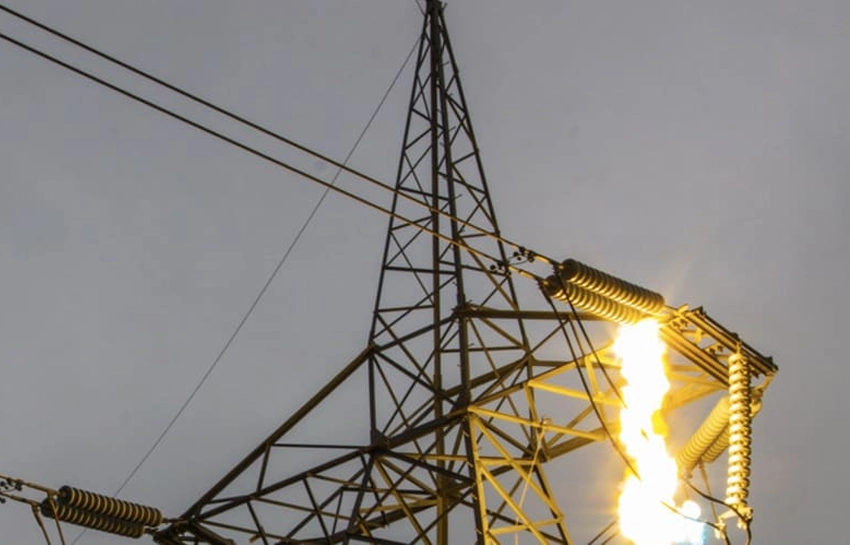
Conducting thorough and detailed short-circuit studies and analysis of industrial and commercial power systems is of critical importance. Electric power systems in industrial plants and commercial and institutional buildings are designed to serve loads in a safe and reliable manner. One of the major considerations in the design of a power system is adequate control of short-circuits or faults as they are commonly called.
Uncontrolled short-circuits can cause service outage with accompanying production downtime and associated inconvenience, interruption of essential facilities or vital services, extensive equipment damage, personnel injury or fatality, and possible fire damage.
Short-circuits are caused by faults in the insulation of a circuit, and in many cases an arc ensues at the point of the fault. Such an arc may be destructive and may constitute a personnel arc-flash hazard or a structure fire hazard. Prolonged duration of arcs, in addition to the heat released, may result in transient over voltages that may endanger the insulation of equipment in other parts of the system. Faults can also be caused by accidental contact or too small a separation between live conductors or between live conductors and ground. Arcing faults, specifically at low voltage, may be significantly lower in magnitude than calculated maximum bolted faults. Clearly, the fault must be quickly removed from the power system, and this is the job of the circuit protective devices—the circuit breakers and fusible switches.
A short-circuit current generates heat that is proportional to the square of the current magnitude, IR. The large amount of heat generated by a short-circuit current may damage the insulation of rotating machinery and apparatus which is connected in the faulted system, including cables, transformers, switches, and circuit breakers. The most immediate danger involved in the heat generated by short-circuit currents is permanent destruction of insulation. This may be followed by actual fusion of the conducting circuit, with resultant additional arcing faults.
Due to the severe impact that a short-circuit can cause to power system operation and safety of equipment and personnel, a fault in a system must be automatically detected and removed from the system as soon as possible. This requires extensive studies of system conditions under a fault.
The results from a short-circuit analysis are required in the design of new systems and in analysis of existing systems. In the design of a new system, they are used to size equipment ratings, such as bus bars, cables, transformers, and protective devices. For an existing system, the short-circuit analysis results are used to verify acceptable equipment ratings. The following are objectives for short-circuit analysis:
- Verify the protective device closing and latching capability.
- Verify the protective device interrupting capability.
- Verify the equipment’s ability to withstand large mechanical forces caused by the maximum short circuit capacity.
- Verify the equipment’s ability to withstand thermal stress based on I2t values.
- Determine branch fault currents under various conditions as required to determine protective relay settings and associated equipment ratings.
- Determine short-circuit currents necessary for the calculation of arc fault incident energy.
Reference Standard: IEEE Std 3002.3, IEC 60909, IEC 61363-1, IEEE Std 141, IEEE Std 241, IEEE Std 242
Download Checklist Here Download Checklist Here